Key Systemic Advantages of China's Healthcare Infrastructure for Global Patients

When evaluating destinations for international medical care, key factors include clinical infrastructure, treatment accessibility, and cost transparency. China's healthcare system offers accredited medical facilities, advanced medical technology, and highly structured clinical pathways for international patients.

Coordinating international medical care involves complex administrative processes. As a medical concierge service, UMedGlobal manages the logistical framework—including travel arrangements and medical translation. This support structure allows global patients and their accompanying families to maintain focus on the treatment process. The following sections outline the key systemic features of seeking medical care in China.

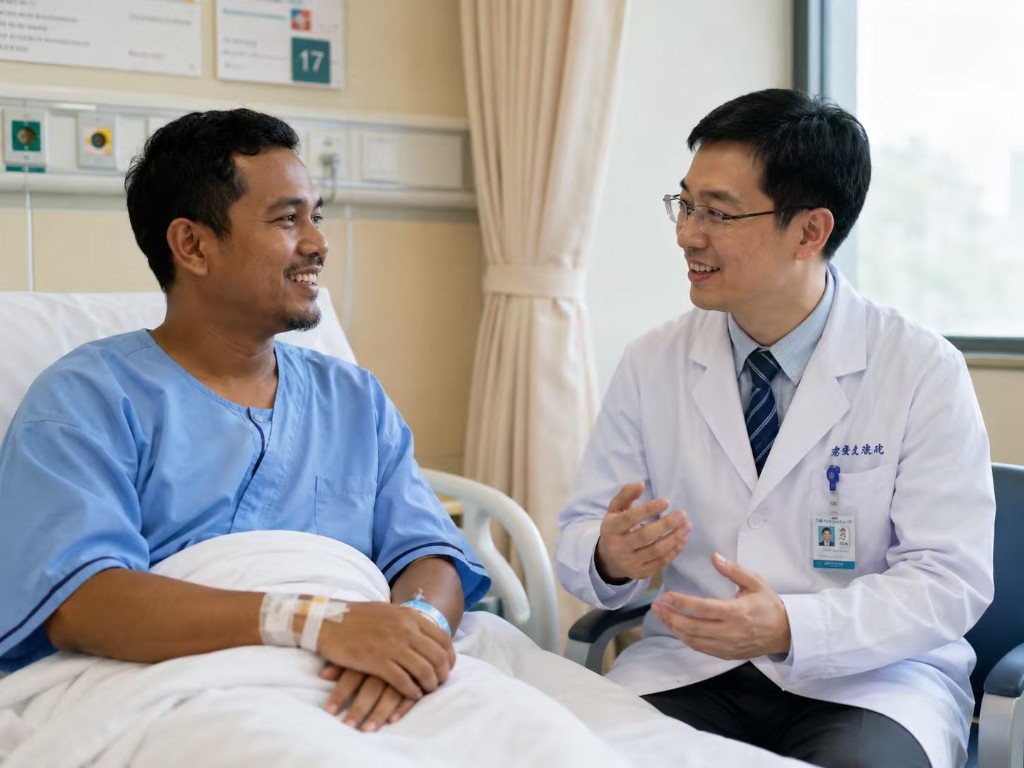
Doctor speaking with a smiling patient in a modern hospital room in China

Unpacking the Key Benefits of Medical Tourism in China

1. Cost-effective Quality Care

For many international patients, out-of-pocket medical expenses and insurance limitations present significant logistical challenges. Treatment at Class III hospitals in China typically represents a lower cost alternative compared to similar procedures in several Western healthcare systems, supported by government-regulated fee structures.

Cost Comparison and Fee Structures

Comparative Cost Efficiency:

Treatment at Class III hospitals in China often represents a lower out-of-pocket expense compared to many international healthcare systems. For reference, procedures such as cardiac surgery that may cost approximately $50,000 in the U.S. are generally priced between $10,000 and $15,000 in China.

Regulated Fee Schedules:

Chinese public hospitals operate under a government-regulated fee structure, which requires upfront itemization for consultations, diagnostics, and surgical procedures. A standard consultation fee in public facilities typically ranges from 20 to 50 RMB (approximately $3–$7 USD).

Pharmaceutical Pricing:

Centralized procurement policies in China apply price ceilings on many essential pharmaceuticals and medical consumables. This regulatory framework often results in significantly lower costs for generic medications compared to standard international pricing models. For international patients, this transparency allows for more accurate estimations of total medical expenditures prior to travel.

2. Short Waiting Times

Extended triage and referral timelines can affect treatment schedules. Many high-capacity hospitals in China utilize AI-optimized scheduling and dedicated international departments to facilitate prompt specialist consultations and streamline patient flow.

China's healthcare system is optimized for efficiency:

Dedicated International Departments:

Many Class III hospitals operate specific administrative departments for international patients to coordinate specialist referrals and language support. Institutions such as Peking Union Medical College Hospital maintain triage protocols capable of accommodating same-day consultations for clinically urgent cases.

High-Capacity Clinical Infrastructure:

Major public hospitals operate with significant patient throughput supported by systematic triage protocols. For context, the First Affiliated Hospital of Zhengzhou University accommodates approximately 25,700 daily outpatient visits (over 9.38 million annually), reflecting the system’s capacity to process large patient populations.

Automated Resource Allocation:

Hospitals increasingly utilize algorithmic and AI-assisted scheduling systems to manage clinical resources. These platforms dynamically adjust appointment queues based on provider availability and clinical urgency, which has been shown to reduce administrative waiting periods by 30-40%.

3. Advanced Clinical Technology

In certain healthcare systems, access to specialized interventions for rare conditions or complex surgical procedures may be restricted by resource availability. Chinese tertiary care centers offer international patients alternative access to advanced medical technologies and clinical innovations.

Advancements in Clinical Infrastructure and Technology

Internationally Ranked Facilities:

Several Chinese medical institutions are recognized in global clinical assessments. In the 2024 Fudan University Global Hospital Rankings, twelve Chinese hospitals secured positions. Facilities such as Peking Union Medical College Hospital (ranked #24 globally) utilize advanced robotic surgery platforms that meet international standards. This reflects sustained investments in clinical research and healthcare infrastructure.

Integration of AI Diagnostics:

Major metropolitan hospitals are integrating AI-assisted diagnostic tools into their clinical workflows. Platforms such as "Deepwise" are utilized in Beijing to support the radiological analysis of CT and MRI scans. Clinical data indicates these systems achieve high diagnostic concordance (up to 95%) and serve as effective secondary verification tools, enhancing overall diagnostic precision compared to manual review alone.

Specialized Surgical Capabilities:

Due to a high volume of complex cases, clinical centers in China have developed extensive surgical expertise, particularly in minimally invasive techniques. For specialized procedures such as liver transplants, documented 5-year survival rates at leading centers reach up to 93%. In the field of urology, facilities like Shanghai Renji Hospital perform over 1,000 robotic-assisted prostate surgeries annually, with clinical records demonstrating high procedural efficacy and average post-operative hospital stays of approximately 3 days.

4. Traditional Chinese Medicine (TCM)

For chronic condition management and post-operative rehabilitation, some patients seek integrative approaches alongside standard pharmacological treatments. Select Chinese medical institutions offer coordinated care plans that combine modern diagnostics with evidence-based Traditional Chinese Medicine (TCM) protocols.

China integrates ancient wisdom with modern science:

Clinical Integration of Standard and Traditional Therapies:

Several Chinese medical institutions offer care models that utilize standard clinical diagnostics alongside Traditional Chinese Medicine (TCM) protocols. For instance, documented clinical approaches at Shanghai Ruijin Hospital involve coordinated treatment plans incorporating both chemotherapy and specific TCM treatments for certain types of leukemia. Furthermore, national training frameworks increasingly support physician familiarity with both systems to facilitate coordinated post-surgical rehabilitation.

Coordinated Rehabilitation Protocols:

Utilizing data analytics and biomechanical assessments, rehabilitation centers structure individualized recovery plans. Examples of this integrative approach include coordinated chronic condition management, such as the application of dialysis alongside targeted TCM support at Zhejiang University Hospital. Postoperative care at facilities like Longhua Hospital frequently incorporates physiological monitoring to adjust physical therapy and TCM treatments dynamically.

Adjunct TCM Interventions:

TCM formulations are frequently utilized as adjunct therapies to support standard medical treatments. According to clinical reports, integrative approaches may assist in managing treatment-related symptoms, such as chemotherapy-induced nausea, while supporting overall patient recovery. The production and administration of TCM ingredients in Tier-1 hospitals are regulated by strict, standardized quality control frameworks to monitor safety and manage potential adverse reactions.

5. Comprehensive International Patient Support

Navigating unfamiliar healthcare systems and language differences can present logistical and administrative challenges for international patients. Precise medical translation and dedicated on-the-ground support are essential to maintaining clinical accuracy and ensuring clear, effective communication between patients and treating physicians.

Comprehensive Patient Support Infrastructure:

Multilingual Patient Navigation:

Nationally preeminent tertiary hospitals offer organized international patient services in more than 15 languages, encompassing English, Arabic, and Russian, among others. Shanghai Ruijin Hospital’s international department employs AI-assisted translation systems and in-house medical interpreters to facilitate clear clinical communication for non-Chinese speaking patients.

Certified Medical Translation:

Government-accredited medical translation specialists are utilized to maintain accuracy in cross-cultural medical care. The China International Medical Translation Association (CIMTA) trains professionals using WHO-aligned terminology databases. For specialized consultations, clinical linguists ensure that complex medical terminology and patient histories are accurately conveyed between international patients and their treating physicians.

International Insurance Coordination:

Select top-tier hospitals partner with major international insurers (e.g., Cigna, Allianz) to offer direct billing services. For example, Peking Union Medical College Hospital utilizes a dedicated claims system to process overseas insurance reimbursements efficiently, minimizing out-of-pocket expenses and simplifying administrative requirements for patients.

6. Visa Convenience & Medical Tourism

Standard international visa processing timelines can occasionally conflict with urgent medical schedules. China has recently expanded its visa-free network and implemented medical visa pathways to expedite entry for international patients seeking treatment.

China has significantly streamlined its visa policies:

Expanded Visa Exemptions for International Patients:

China has implemented unilateral visa-free access for 50 countries and maintains comprehensive mutual visa exemption agreements with 29 countries. Multiple ports of entry across the country also offer transit visa exemptions. International patients and their accompanying family members from the aforementioned regions can reduce administrative preparation time and plan their travel more swiftly when urgent consultations are required.

Optimized Visa Application Procedures:

Recent administrative updates have streamlined the standard visa application process. These measures include a reduction in required application documents, the elimination of mandatory pre-booking appointments in certain jurisdictions, and a reduction in standard processing fees, facilitating smoother entry preparation for medical travelers.

Medical-Specific Entry Pathways:

For patients originating from countries outside the visa-exemption network, short-term visas (such as the S2 visa for private affairs, including medical treatment) are available. UMedGlobal coordinates with admitting hospitals to provide the necessary official invitation letters and medical appointment confirmations required for these specific consular applications.

7. Logistical and Infrastructure Support

Beyond clinical care, China's broader public infrastructure and secure social environment offer practical support for international patients navigating extended medical stays.

Public Safety and Security:

China maintains standardized public safety protocols across its major urban centers. According to official 2023 statistics, the national crime rate was recorded at 0.36 incidents per 100,000 population, with violent crime rates at 0.46 per 100,000. These stable social conditions provide a secure environment for international patients and their accompanying family members during extended treatment and recovery periods.

Ancillary Living Expenses:

When calculating the total cost of medical travel, ancillary expenses such as daily sustenance, accommodation, and local transportation are critical factors. International patients generally find that the standardized cost of living in Chinese metropolitan areas is competitive, allowing for manageable budgeting for long-term stays. Public services and facilities operate on a unified pricing structure for both local residents and international visitors.

Digital Payment Infrastructure:

China utilizes a highly digitized payment ecosystem. Primary mobile platforms, including Alipay and WeChat Pay, support the integration of international credit cards (such as Visa and Mastercard). These platforms accommodate transaction limits of up to $5,000 per transaction for verified international users. With over 90% of urban merchants accepting mobile payments, daily transactions are predominantly cashless, though traditional currency exchange services remain available at major hubs.

Logistical and Accommodation Support:

Recent administrative updates have standardized hotel registration procedures for international visitors, alongside the implementation of multilingual signage and digital translation support. Major urban medical centers are serviced by accessible public transportation, including bilingual transit systems and integrated digital payment options for local transit.

Pricing Parity and Administrative Pathways:

International patients are subject to the same regulated fee structures as domestic residents within the public healthcare sector, ensuring price transparency. Additionally, formalized administrative pathways, including specialized medical visas and extended stay permits, are available to support patients requiring long-term clinical care or extended rehabilitation.

Domestic and International Connectivity:

China operates an extensive High-Speed Rail (HSR) network that connects major metropolitan medical hubs (e.g., Beijing to Shanghai in approximately 4.5 hours), facilitating efficient domestic medical transfers. International access is supported by high-volume flight routing through primary hubs such as Beijing Capital and Shanghai Pudong airports. Local urban transit is highly digitized, utilizing established ride-hailing applications and comprehensive subway networks.

How UMedGlobal Simplifies Your Medical Journey to China

Navigating cross-border healthcare systems demands precise logistical coordination. As a medical information consulting and coordination service, we manage the administrative, translation, and travel logistics for international patients traveling to China, allowing patients and their accompanying family members to remain focused on the clinical journey.

Our international patient coordination services encompass:

Healthcare Institution & Specialist Coordination:

  • Leveraging our established network to facilitate access to JCI-accredited institutions, tertiary public hospitals, and specialty clinical departments tailored to your specific medical needs.

Clinical Translation & Interpretation:

  • Providing professional medical record translation and coordinating certified on-site interpretation for clinical consultations to overcome language barriers.

Travel & Accommodation Logistics:

  • Assisting with the administrative processes for securing appropriate medical visas, as well as coordinating flight and accommodation arrangements for patients and accompanying relatives.

Local Support:

  • Assigning a local UMedGlobal coordinator in China to assist with hospital admission procedures, local transportation, and essential logistical support throughout the treatment period.

Frequently Asked Questions (FAQ)

Q1: How does the cost of medical treatment in China compare to other international healthcare systems?

  • Treatment at Class III hospitals in China typically represents a lower out-of-pocket expense compared to many international healthcare systems.
  • Chinese public hospitals operate under a government-regulated fee structure that requires upfront itemization. For example, a standard consultation fee in a public facility generally ranges from $3 to $7 USD.
  • Additionally, centralized procurement policies apply price ceilings on many essential pharmaceuticals, resulting in lower costs for generic medications.

Q2: How are language barriers managed during clinical consultations?

  • Nationally preeminent tertiary hospitals offer organized international patient services in more than 15 languages, encompassing English, Arabic, and Russian, among others.
  • To ensure clear clinical communication, facilities utilize in-house medical interpreters, AI-assisted translation systems, and government-accredited medical translation specialists.
  • These professionals are trained using WHO-aligned terminology databases, ensuring that complex medical terminology and patient histories are accurately conveyed.

Q3: What specific logistical support does UMedGlobal provide for international patients?

  • Acting as a provider of medical information consulting and coordination services, YouMed oversees the administrative, translational, and travel-related logistics for patients destined for China.
  • Our services include coordinating introductions to JCI-accredited facilities and Class III public hospitals based on specific medical requirements.
  • We also assist with the professional translation of medical records, coordinate medical visa applications and travel arrangements, and assign a local coordinator in China to assist with hospital admission procedures and local transportation.

Q4: What is the visa procedure for seeking medical treatment in China?

  • China has implemented unilateral visa-free access for citizens of 50 countries and maintains comprehensive mutual visa exemption agreements with 29 countries.
  • For patients originating from countries outside this visa-exemption network, short-term visas designed for private affairs and medical treatment (such as the S2 visa) are available.
  • UMedGlobal coordinates directly with admitting hospitals to provide the necessary official invitation letters and medical appointment confirmations required for these consular applications.

Initiate Your Medical Coordination

China’s healthcare system integrates cost-effective clinical infrastructure, advanced medical technology, integrative therapies, and structured support services to address the complex requirements of international patients. For individuals requiring specialized surgery, chronic condition management, or multidisciplinary care, China provides an established network for cross-border medical travel. Through UMedGlobal, patients can access accredited facilities and experienced clinical professionals with comprehensive logistical support, allowing you and your family to maintain focus on the treatment and recovery process.

Ready to Explore Your Medical Treatment Options in China?

Please contact UMedGlobal to arrange for an initial logistical evaluation. Our team offers full-spectrum medical information consulting services to clients worldwide, systematically addressing administrative, translational, and travel-related requirements.